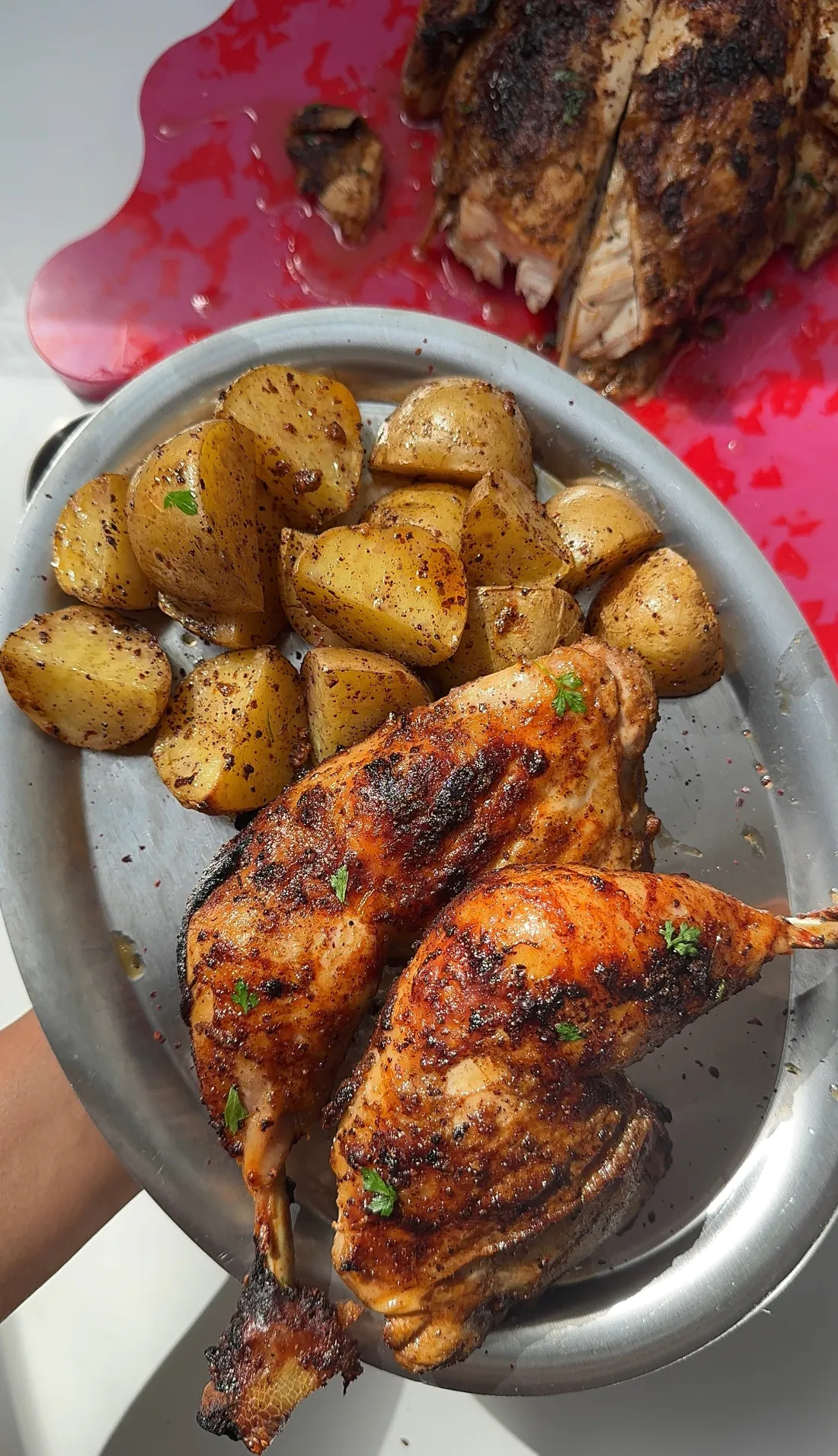


I love a good roast chicken and I have a few versions on the blog already, but this one is different because of the brine. I know brining feels like an extra step and it does take planning ahead, but it makes such a significant difference to the final result that once you try it you will not want to skip it again. The chicken is noticeably more juicy and flavorful all the way through, not just on the surface.
The marinade is where the fusion happens. A sumac and cumin spice blend rubbed over the brined chicken gives it a warmth and tanginess that reminds me of Sajji chicken from Pakistan. If you have ever had Saji, you know that distinct smokiness and tartness from the spices. This roast brings that same energy but in a Western roast chicken format with potatoes underneath catching all the dripping juices. It is one of my favorite things to make and it feels special enough for a Sunday without being overly complicated.
Why You’ll Love This Recipe
- Brining makes the chicken incredibly juicy and flavorful all the way to the bone
- A sumac and cumin marinade that is a beautiful fusion of Eastern and Western flavors
- The potatoes roast underneath and absorb all the chicken drippings
- Spatchcocking the chicken means it cooks faster and more evenly
- That final sprinkle of sumac at the end brings a tanginess reminiscent of Pakistani Saji chicken
- A showstopper meal that is absolutely worth the planning ahead
Ingredients
For the Brine
- 1 to 1.5kg whole chicken, neck removed and spatchcocked
- 2 litres cold water
- 100g salt
- 1 tbsp sugar
- 1 tbsp black peppercorns
- 6 to 7 bay leaves
- 3 to 4 lemon slices
For the Marinade
- 5 to 6 tbsp olive oil
- 2 tbsp Greek yogurt
- 1 tbsp tomato paste
- 2 tbsp lemon juice
- 1 tsp salt
- 2 tsp cumin powder
- 2 tsp coriander powder
- 3 tsp sumac
- 1/2 tsp cinnamon powder
- 2 tsp paprika
- 2 tsp white pepper
- 1 tsp garlic powder
For the Potatoes
- 8 to 10 small potatoes, skin on, cut into large cubes
- 2 to 3 tbsp olive oil
- A few pinches of salt
- 1 tsp sumac
To Finish
- Extra sumac to sprinkle on top after roasting
Instructions
1. Spatchcock the Chicken
Place the chicken breast side down on a cutting board. Using sharp kitchen scissors or a knife, cut along both sides of the backbone from the tail end up to the neck and remove it completely. Flip the chicken over so it is breast side up and press firmly down on the breastbone with the heel of your hand until you hear a crack and the chicken flattens out. It should now lie flat.
Spatchcocking is what allows the chicken to cook faster and more evenly. The thicker breast and the thinner legs cook at the same rate when the bird is opened out flat, which means no dry breast meat by the time the legs are done.
2. Make the Brine
Take 500ml of the water and add the salt and sugar. Heat over medium heat, stirring until both are completely dissolved. Pour this into the remaining 1.5 litres of cold water and stir to combine. Make sure the brine is fully cooled before adding the chicken. If you want to speed this up, reduce the cold water by 100ml and add a handful of ice cubes to the brine instead.
Once cooled, add the black peppercorns, bay leaves, and lemon slices. Submerge the spatchcocked chicken completely in the brine. If the chicken floats, weigh it down with a plate. Cover and refrigerate for at least 8 to 10 hours. Overnight is ideal.
3. Dry the Skin
Remove the chicken from the brine the next day and discard the brine. Pat the chicken completely dry with paper towels, including the underside and any cavities. Do not skip this step. Any moisture left on the skin will steam rather than crisp in the oven.
Place the chicken skin side up on a wire rack over a tray and return it to the fridge uncovered for a few more hours. Leaving it uncovered lets the skin dry out further in the cold air of the fridge, which is what gives you that deeply golden, crispy skin after roasting.
4. Make the Marinade
In a bowl, combine the olive oil, Greek yogurt, tomato paste, lemon juice, salt, cumin, coriander, sumac, cinnamon, paprika, white pepper, and garlic powder. Mix until you have a smooth, thick paste.
5. Marinate the Chicken
Remove the chicken from the fridge. Rub the marinade all over the chicken, getting it under the skin where possible and covering the underside as well. Every part of the chicken should be well coated.
Leave to marinate at room temperature for 1 to 2 hours before roasting. Taking the chill off the chicken before it goes in the oven helps it cook more evenly.
6. Prepare the Potatoes and Roast
Preheat your oven to 220°C for at least 15 minutes before baking.
Cut the potatoes into large cubes, keeping the skin on. Place them in a roasting dish and toss with the olive oil, salt, and sumac until well coated. Spread them out in an even layer.
If you have a wire rack that fits over your roasting dish, place it on top of the potatoes and set the marinated chicken on the rack. The chicken drippings will fall directly onto the potatoes below as it roasts, which is what makes them so incredibly flavorful. If you do not have a rack, place the chicken directly on top of the potatoes.
Cover the dish tightly with foil and roast for 30 minutes. This initial covered period helps the chicken cook through with steam before the skin crisps up.
Remove the foil and roast for a further 20 to 25 minutes until the skin is deeply golden and caramelized. To check if the chicken is cooked, use a meat thermometer inserted at the thickest part of the joint between the leg and thigh. You are looking for an internal temperature of 75°C or 165°F. If you do not have a thermometer, pierce the joint and check that the juices run completely clear with no pink.
7. Rest and Finish
Remove the chicken from the oven and leave it to rest for 10 minutes before carving. Resting allows the juices to redistribute through the meat so they do not all run out the moment you cut into it.
Just before serving, sprinkle a little extra sumac over the top. This final addition of sumac adds a fresh tartness that brings the whole dish together and gives it that Saji chicken quality.
Serve with the sumac potatoes from the pan.
Why the Brine Makes the Difference
Brining works by allowing the salt water to penetrate deep into the muscle fibers of the chicken. The salt breaks down some of the proteins slightly, which allows the meat to hold onto more moisture during cooking. The result is chicken that stays juicy even after a long time in a hot oven, and is seasoned from the inside out rather than just on the surface.
I have roasted chicken with and without brining many times and the difference is genuinely noticeable. The brined chicken is more tender, more flavorful, and far more juicy. The only thing it requires is planning ahead, which makes it the perfect recipe to start the night before a Sunday roast.
The Sumac and Cumin Marinade
Sumac is a tangy, slightly fruity Middle Eastern spice that is one of my favorite things to cook with. In this marinade it works alongside cumin, coriander, and cinnamon to create something that is warm, aromatic, and deeply complex. The yogurt in the marinade helps it cling to the chicken and also adds a tenderness to the outer layer of the meat as it roasts.
The extra sprinkle of sumac at the end is not just a garnish. It adds a brightness and tartness at the point of eating that keeps the flavor fresh rather than heavy. It is the detail that takes this from a regular roast chicken to something that feels genuinely special.
The Potatoes
The potatoes are arguably the best part of this whole recipe and that is a high bar. They sit underneath the chicken and catch every single drop of the spiced, marinated drippings as the chicken roasts. By the time the chicken is done the potatoes are golden on the outside, tender on the inside, and coated in all that flavor.
The sumac on the potatoes ties them in with the marinade and makes the whole dish feel cohesive.
Tips for Getting It Right
Make sure the brine is completely cooled before adding the chicken. Adding a hot or warm brine will partially cook the chicken and affect the texture.
Dry the skin thoroughly after brining and again after the fridge rest. Wet skin is the enemy of crispy skin. Paper towels and patience are your best friends here.
Do not skip the room temperature rest before roasting. Cold chicken going into a hot oven will cook unevenly with the outside drying out before the inside is done.
Use a meat thermometer if you have one. It removes all guesswork and guarantees perfectly cooked chicken every time.
Let the chicken rest properly after coming out of the oven. Ten minutes uncovered is enough. Cutting into it immediately loses all the juices you worked so hard to retain through the brining process.
Storage and Reheating
Leftover roast chicken keeps well in the fridge for up to 3 days. Store the chicken and potatoes in separate airtight containers.
Reheat the chicken in the oven at 160°C covered loosely with foil until warmed through. The potatoes reheat well in the oven or air fryer to bring back some of the crispiness. Leftover roast chicken also works beautifully shredded into sandwiches, salads, or pasta the next day.
Frequently Asked Questions (FAQ)
Q. Can I brine the chicken without spatchcocking it?
Yes. A whole unspatchcocked chicken can be brined the same way. It will just take longer to roast and the cooking may be less even. Spatchcocking is strongly recommended for the best result.
Q. What if I do not have enough time to brine overnight?
A minimum of 4 hours will still make a noticeable difference. The longer the brine the better the result, but even a shorter brine is better than no brine at all.
Q. Can I use dried sumac if I cannot find it fresh?
Sumac is always sold dried and ground. It is widely available in Middle Eastern grocery stores and online. It is worth tracking down as it is key to the flavor of both the marinade and the final finishing touch.
Q. What if I do not have a wire rack for roasting?
Place the chicken directly on top of the potatoes. The potatoes will still absorb the drippings and cook beautifully, they just may not get quite as crispy on the bottom.
Q. How do I know the chicken is cooked without a thermometer?
Pierce the thickest part of the joint between the leg and the thigh with a skewer or sharp knife. If the juices run completely clear with no trace of pink, the chicken is cooked through. If there is any pink in the juices, return it to the oven for another 10 minutes and check again.

Sunday Chicken Roast
Ingredients
For the Brine
- 1 to 1.5 kg whole chicken neck removed and spatchcocked
- 2 litres cold water
- 100 g salt
- 1 tbsp sugar
- 1 tbsp black peppercorns
- 6 to 7 bay leaves
- 3 to 4 lemon slices
For the Marinade
- 5 to 6 tbsp olive oil
- 2 tbsp Greek yogurt
- 1 tbsp tomato paste
- 2 tbsp lemon juice
- 1 tsp salt
- 2 tsp cumin powder
- 2 tsp coriander powder
- 3 tsp sumac
- 1/2 tsp cinnamon powder
- 2 tsp paprika
- 2 tsp white pepper
- 1 tsp garlic powder
For the Potatoes
- 8 to 10 small potatoes skin on, cut into large cubes
- 2 to 3 tbsp olive oil
- A few pinches of salt
- 1 tsp sumac
To Finish
- Extra sumac to sprinkle on top after roasting
Instructions
- Spatchcock the chicken by placing it breast side down and cutting along both sides of the backbone with kitchen scissors. Remove the backbone, flip the chicken breast side up, and press firmly on the breastbone until it flattens out.
- Heat 500ml of the water with the salt and sugar until dissolved. Combine with the remaining 1.5 litres of cold water and leave until completely cooled. Add the peppercorns, bay leaves, and lemon slices. Submerge the chicken in the brine, cover, and refrigerate for at least 8 to 10 hours or overnight.
- Remove the chicken from the brine and pat completely dry with paper towels. Place skin side up on a wire rack over a tray and refrigerate uncovered for a few more hours to dry the skin further.
- Mix all the marinade ingredients together into a smooth paste. Rub all over the chicken, including the underside and under the skin where possible. Leave to marinate at room temperature for 1 to 2 hours before roasting.
- Preheat the oven to 220°C. Toss the potatoes with olive oil, salt, and sumac in a roasting dish. Place a wire rack over the potatoes and set the chicken on top. Cover tightly with foil and roast for 30 minutes.
- Remove the foil and roast for a further 20 to 25 minutes until the skin is deeply golden. Check the internal temperature at the joint between the leg and thigh. You are looking for 75°C or 165°F. If you do not have a thermometer, pierce the joint and check that the juices run completely clear.
- Rest the chicken for 10 minutes before carving. Sprinkle extra sumac over the top just before serving. Serve with the sumac potatoes from the pan.