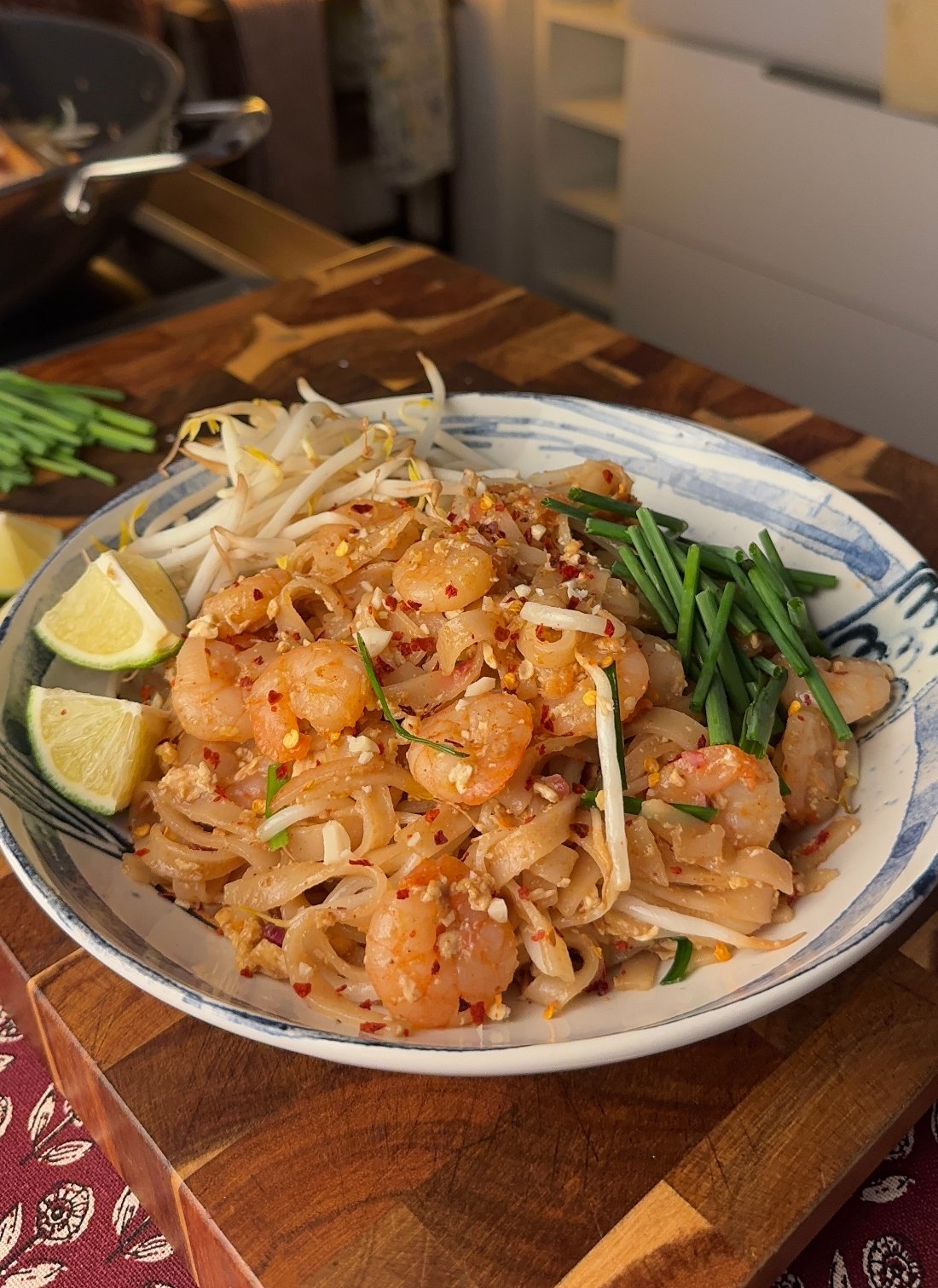
Pad Thai is one of my absolute favorite Thai street food dishes to recreate at home. There is something so magical about chewy rice noodles tossed over high heat with succulent shrimp, crispy pressed tofu, tender-crisp bean sprouts, and garlic chives, all wrapped in a rich, sweet, and tangy tamarind palm sugar sauce.
While ordering takeout is easy, making Pad Thai from scratch gives you complete control over the flavor balance and quality of ingredients. I like loading mine up with extra juicy shrimp, but the true secret to making restaurant-quality Pad Thai at home lies in two things: a proper two-step noodle soak and an authentic, homemade tamarind palm sugar sauce!
Why You’ll Love This Recipe
- Authentic Tamarind Sauce: Made from scratch with real palm sugar, Thai tamarind paste, fish sauce, and a touch of MSG for that undeniable street-food umami depth.
- Perfect Noodle Texture: The signature two-step soaking technique guarantees chewy, tender rice noodles that never turn mushy or stick together.
- Loaded with Protein: Packed with plenty of jumbo shrimp, savory pressed tofu, and soft scrambled eggs scrambled right into the pan.
- Fresh & Crunchy Balance: Tossed with garlic chives and fresh bean sprouts, then served with toasted chopped peanuts, fresh lime wedges, and chilli flakes for customizable crunch and heat.
- Quick High-Heat Stir-Fry: Once your prep is done, everything cooks together in a hot wok in under 10 minutes!
Ingredients
For the Pad Thai Sauce
- 6 tbsp (65g) tightly packed palm sugar (or sub packed brown sugar)
- 6–7 tbsp (90ml) water
- 5 tbsp Thai tamarind paste
- 3 tbsp fish sauce
- 1 tsp MSG
For the Pad Thai Stir-Fry
- 3–4 tbsp vegetable oil
- 400g shrimp, peeled and deveined (I love using extra shrimp, but feel free to use less or swap for your preferred protein!)
- 1 shallot, finely chopped
- 3–4 garlic cloves, finely chopped
- 120g pressed yellow or firm tofu, cut into small cubes
- 300g rice noodles (Size L / medium-wide Pad Thai rice sticks)
- 2 large eggs
- 2–3 cups fresh bean sprouts
- Handful of garlic chives, cut into 2-inch pieces (or sub spring onions)
For Serving & Garnish
- ½ cup chopped toasted peanuts
- 3–4 fresh lime wedges
- 1 cup fresh bean sprouts
- Fresh garlic chives
- Chilli flakes (to taste)
Instructions
1. Soak the Rice Noodles (Two-Step Method)
Place the dried rice noodles in a large bowl and submerge them in room-temperature water for 1 hour.
Just before cooking, strain off the room-temperature water and pour hot water over the noodles for a few minutes until they are soft and pliable but still firm to the bite (al dente). Strain thoroughly and set aside.
2. Make the Pad Thai Sauce
In a small saucepan over medium-low heat, combine the tightly packed palm sugar, water, Thai tamarind paste, fish sauce, and MSG.
Stir continuously for 3 to 4 minutes until the palm sugar is completely melted and smooth. Remove from heat and set aside to cool slightly.
3. Sear the Protein & Aromatics
Heat 2 tablespoons of vegetable oil in a large wok or wide skillet over medium-high heat. Add the shrimp and cook for 1 to 2 minutes per side until pink and cooked through. Remove the cooked shrimp from the wok and set aside.
In the same wok, add another tablespoon of oil if needed. Add the chopped shallot, chopped garlic, and cubed pressed tofu. Stir-fry for 2 to 3 minutes until the garlic is fragrant and the tofu cubes develop a light golden crust.
4. Cook the Noodles & Scramble Eggs
Add the soaked and strained rice noodles directly into the center of the wok, then pour over the prepared Pad Thai sauce. Stir-fry continuously for 2 to 3 minutes over high heat until the noodles absorb the sauce and become tender.
Push the noodles and tofu mixture to one side of the pan. Pour a tiny splash of oil into the empty side and crack in the 2 eggs. Scramble the eggs quickly with your spatula until soft curds form, then fold them into the noodles and tofu.
5. Toss in Greens & Finish
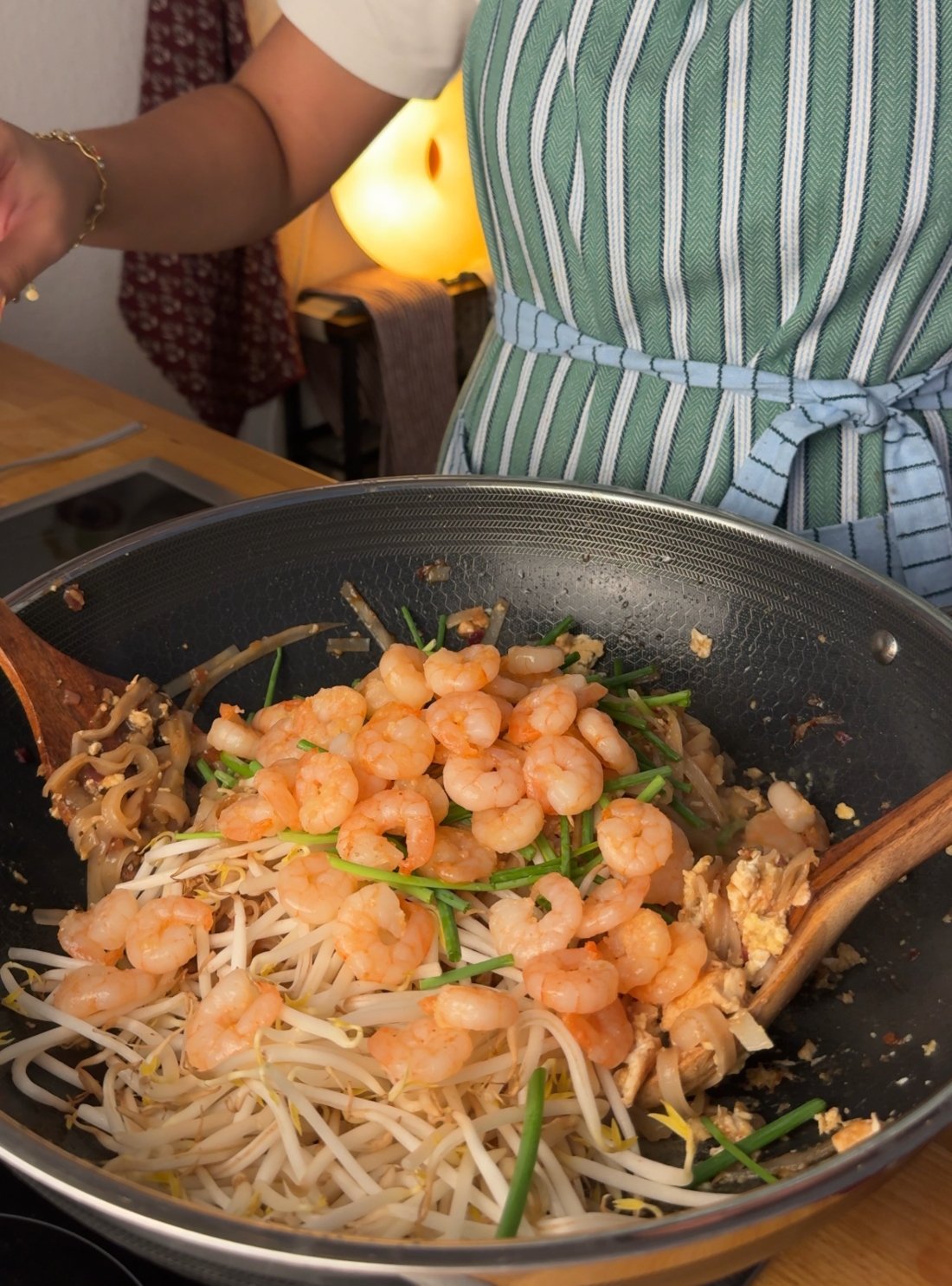
Return the cooked shrimp to the wok. Toss in 2 to 3 cups of fresh bean sprouts and the cut garlic chives. Stir-fry everything together over high heat for just 30 to 60 seconds until the sprouts and chives slightly wilt but stay crisp. Turn off the heat immediately.
6. Garnish and Serve
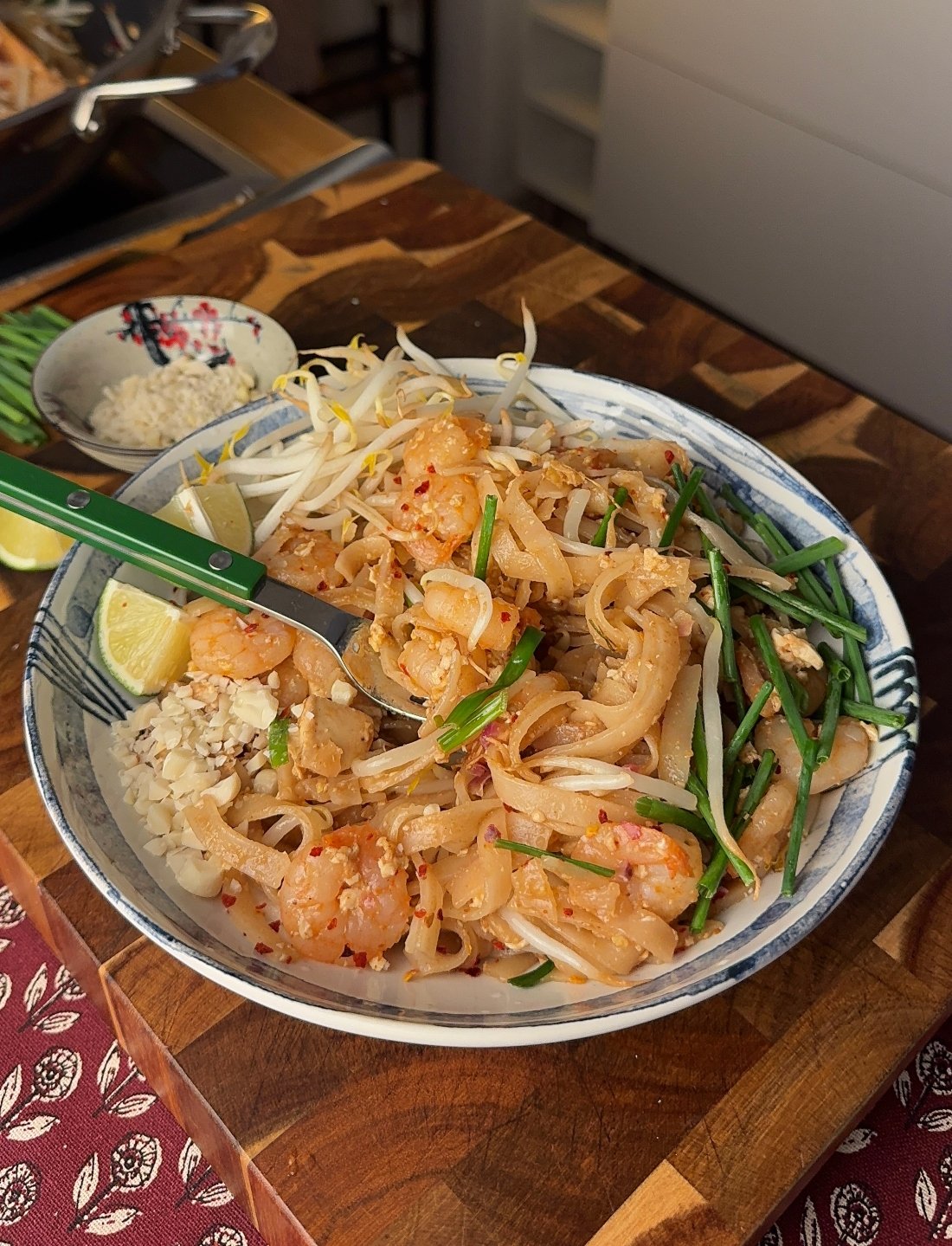
Divide the hot Pad Thai between serving plates. Serve immediately alongside chopped toasted peanuts, fresh lime wedges, extra raw bean sprouts, fresh garlic chives, and chilli flakes for a customizable kick!
The Secret to Perfect Noodles: The Two-Step Soak
The most common mistake when making Pad Thai at home is boiling the rice noodles, which makes them mushy and causes them to break apart during stir-frying.
Soaking the rice noodles in room-temperature water for 1 hour first rehydrates the core slowly. A quick warm water soak right before stir-frying softens the outer layer just enough so that when they hit the hot wok, they absorb the sweet and tangy tamarind sauce perfectly while keeping an amazing chewy texture!
Palm Sugar & Tamarind: The Heart of Pad Thai
Authentic Pad Thai flavor comes from the balance between rich, caramel-like palm sugar and fruity, sour Thai tamarind paste. Palm sugar gives a complex, mellow sweetness that brown sugar can only approximate, while tamarind provides that vibrant, deep tartness without the harsh acidity of vinegar.
Tips for Getting It Right
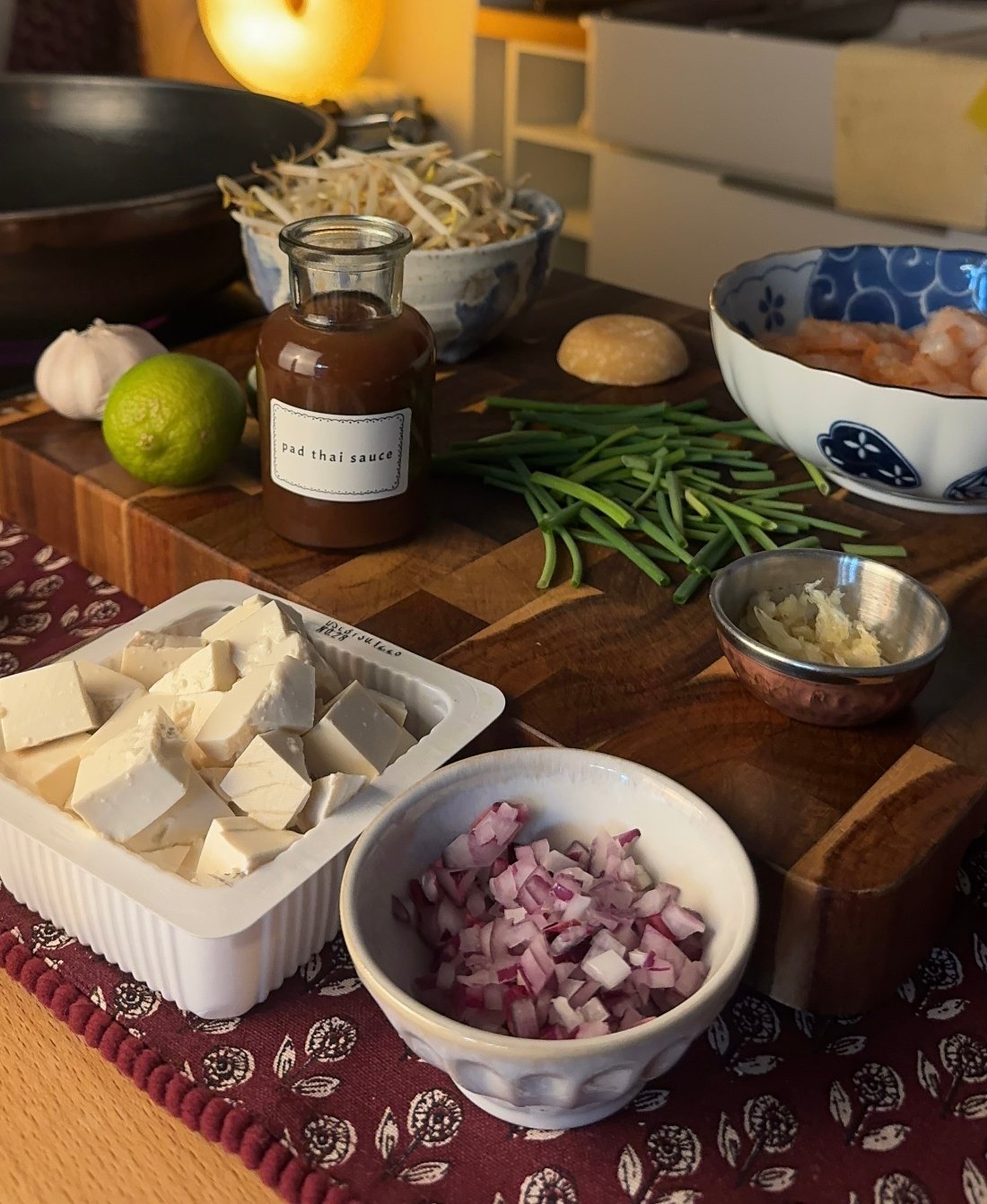
- Prep All Ingredients Before Cooking: Stir-frying happens fast! Have your sauce made, veggies cut, noodles soaked, and toppings ready before turning on the burner.
- Use Pressed Tofu: Look for firm, yellow pressed tofu at Asian grocery stores. It holds its shape remarkably well when tossed over high heat without crumbling into the noodles.
- Don’t Overcrowd the Pan: Cook over high heat in a wide wok or large skillet so the noodles fry rather than steam.
- Don’t Omit Garlic Chives: Garlic chives (gui chai) add a subtle garlicky freshness that is quintessential to authentic Thai street-style Pad Thai. Spring onions work in a pinch if you can’t find them!
Storage and Reheating
- Storage: Keep leftover Pad Thai in an airtight container in the refrigerator for up to 2 days.
- Reheating: Reheat in a hot skillet or wok over medium heat with a splash of water to loosen the noodles, or microwave for 1–2 minutes until heated through.
Frequently Asked Questions (FAQ)
Q. Can I substitute chicken or beef for shrimp?
Yes! Thinly sliced chicken breast/thigh or beef works great. Sauté the meat first, remove it from the pan, and proceed with the recipe as written.
Q. What if I can’t find palm sugar?
You can swap palm sugar with an equal weight of dark or light brown sugar.
Q. Can I make this dish vegetarian?
Yes! Omit the shrimp, swap the fish sauce for soy sauce or vegetarian stir-fry sauce, and add extra pressed tofu and mushrooms!
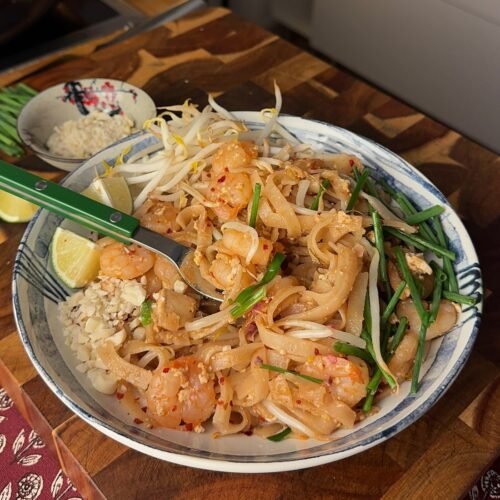
The Ultimate Homemade Pad Thai with Juicy Shrimp, Tofu & Tamarind Sauce
Ingredients
For the Pad Thai Sauce
- 6 tbsp 65g tightly packed palm sugar (or sub packed brown sugar)
- 6 –7 tbsp 90ml water
- 5 tbsp Thai tamarind paste
- 3 tbsp fish sauce
- 1 tsp MSG
For the Pad Thai Stir-Fry
- 3 –4 tbsp vegetable oil
- 400 g shrimp peeled and deveined (I love using extra shrimp, but feel free to use less or swap for your preferred protein!)
- 1 shallot finely chopped
- 3 –4 garlic cloves finely chopped
- 120 g pressed yellow or firm tofu cut into small cubes
- 300 g rice noodles Size L / medium-wide Pad Thai rice sticks
- 2 large eggs
- 2 –3 cups fresh bean sprouts
- Handful of garlic chives cut into 2-inch pieces (or sub spring onions)
For Serving & Garnish
- ½ cup chopped toasted peanuts
- 3 –4 fresh lime wedges
- 1 cup fresh bean sprouts
- Fresh garlic chives
- Chilli flakes to taste
Instructions
- Place rice noodles in a bowl and cover with room-temperature water for 1 hour. Strain off the water, then pour hot water over noodles for a few minutes until pliable but firm. Strain well and set aside.
- In a small saucepan, combine palm sugar, water, Thai tamarind paste, fish sauce, and MSG. Heat over medium-low heat for 3-4 minutes until sugar melts completely. Remove from heat.
- Heat 2 tbsp oil in a large wok over medium-high heat. Cook shrimp for 1-2 minutes per side until pink and cooked through. Remove and set aside.
- Add remaining oil to the wok. Sauté chopped shallot, garlic, and cubed pressed tofu for 2-3 minutes until golden and fragrant.
- Add the strained rice noodles, and pour over the Pad Thai sauce. Stir-fry for 2-3 minutes until noodles absorb the sauce.
- Push noodles to one side, crack the 2 eggs into the empty side, and scramble gently until soft curds form, then fold into the noodles.
- Return cooked shrimp to the wok, add 2-3 cups bean sprouts and garlic chives, and toss for 30-60 seconds over high heat until slightly wilted. Turn off heat.
- Serve hot with chopped toasted peanuts, fresh lime wedges, extra bean sprouts, garlic chives, and chilli flakes.